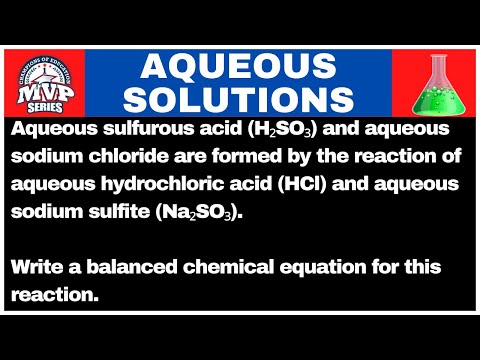
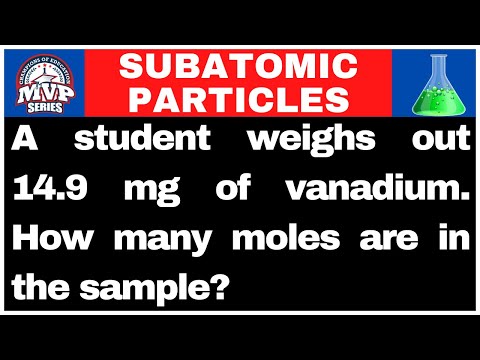
How many electrons are in a neutral atom of iodine-131? How many electrons are in a neutral atom of iodine-131? You Might Also Like Use the data given below to construct a Born Haber cycle to determine the heat of formation of KCl. Calculate the work energy, w, gained or lost by the system when a gas expands from 20 L to 35 L Aqueous sulfurous acid (H₂SO₃) and aqueous sodium chloride are formed by the reaction of aqueous hydrochloric acid (HCl) Magnesium has three naturally occurring isotopes. One has an isotopic abundance of 78.99% and a mass of 23.985042 amu, and the second one has an isotopic abundance of 10.00% and a mass of 24.985837 A student weighs out 14.9 mg of vanadium. How many moles are in the sample?
How many electrons are in a neutral atom of iodine-131? How many electrons are in a neutral atom of iodine-131? You Might Also Like Use the data given below to construct a Born Haber cycle to determine the heat of formation of KCl. Calculate the work energy, w, gained or lost by the system when a gas expands from 20 L to 35 L Aqueous sulfurous acid (H₂SO₃) and aqueous sodium chloride are formed by the reaction of aqueous hydrochloric acid (HCl) Magnesium has three naturally occurring isotopes. One has an isotopic abundance of 78.99% and a mass of 23.985042 amu, and the second one has an isotopic abundance of 10.00% and a mass of 24.985837 A student weighs out 14.9 mg of vanadium. How many moles are in the sample?